Content-based Virtual Museum navigation

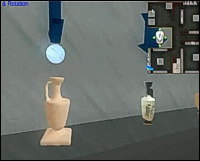
Content based retrieval engine in a Virtual Museum of Pottery
An interactive virtual museum of 3D pottery artefacts has been used as a case study. The virtual visitor can perform queries to the system like ‘Where in this 3D scene I can find vessels similar to this’. Again an attempt to combine a content-based retrieval mechanism within an interactive real time 3D enviroment.
3D digitization of Urban Areas

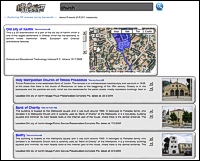
The project involved the three-dimensional digitization and reconstruction of urban areas. The project deals with the idea of combining the usage of commercial and open source software systems in 3D graphics in order to produce realistic virtual walkthroughs for culture heritage promotion with a minimum budget and low cost infrastructure.

We have attempted the 3D reconstruction of three urban areas from three different cities without the use of any expensive equipment (e.g. commercial 3D range scanners based on techniques like triangulation, modulation or time-of-flight).

We have produced a fully textured 3D model that can be easily accessed from the Internet using a VRML viewer plugin for the browser. Acceptable downloading times have been achieved even for slow connections by reducing the texture map quality.
Access to the three-dimensional reconstructions requires the installation of a VRML viewer.

3D reconstruction of Argostoli

A virtual walkthrough at the port of Argostoli, Kefalonia, as it was before the devastating earthquake of 1953.

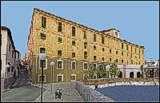
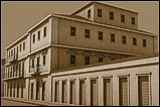
The three-dimensional reconstruction of the area, based on topographic maps, historical photographs and documentary material, depicts the area of the port of Argostoli at the time before the earthquake.

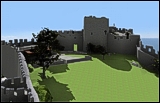
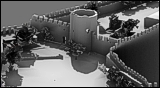
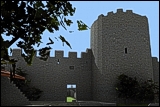
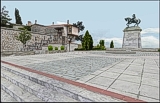
3D digitization of the Byzantine fortress of Kavala

The Byzantine fortress of Kavala is located on top of the peninsula of Virgin Mary, where the old town is built. In Byzantine times and later, many successive reconstructions and alterations to the fortifications have been made by the Byzantines, the Venetians and the Turks.

The fortress at its present condition was built during the first quarter of the 15th century and is based on the foundations built during the Byzantine period.

The 3D digitization of the fortress was done by using time-of-flight scanning technology. For the reconstruction and virtual representation, photorealistic shading technologies have been employed in order to present the fortress with lighting similar to that of a sunny summer day.

3D Digitization of Monuments

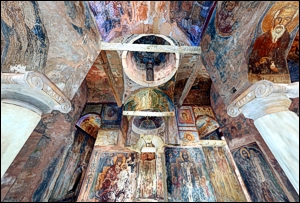
Case: Digitization of Religious Monuments in the region of Mani, Peloponnese

The project involves the digitization and 3D reconstruction of a Byzantine church in the area of Stavri in Mani and the Post-Byzantine church of Aghios Vasileios in the Kelefa settlement. The goal of the project was the universal dissemination of the monuments. The virtual walkthrough includes the exterior as well as the interior of the churches.
ISO 9001:2008

The Multimedia Department has successfully renewed its ISO 9001:2000 into ISO 9001:2008 certificate for its services on 3D digitization of cultural heritage.

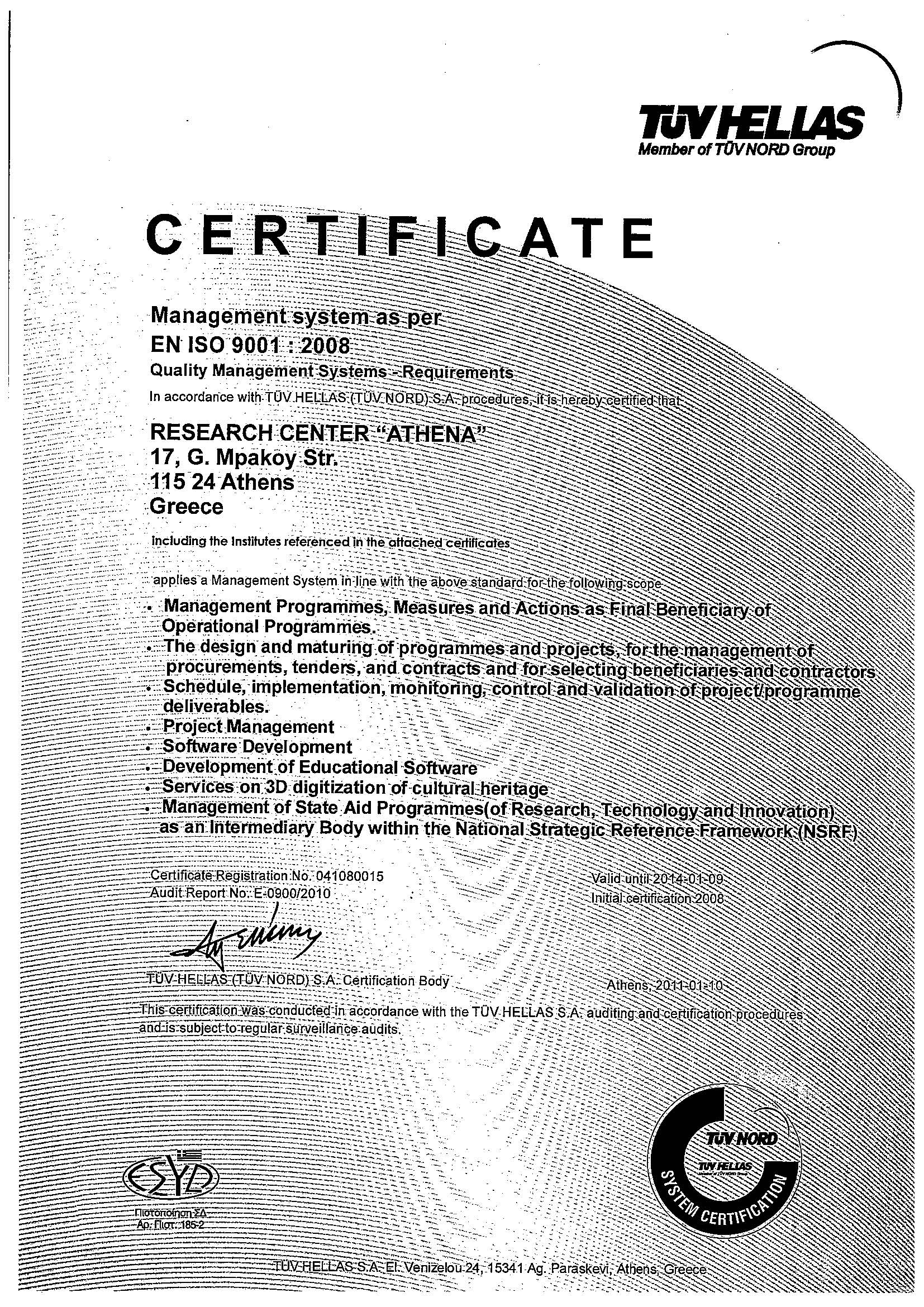
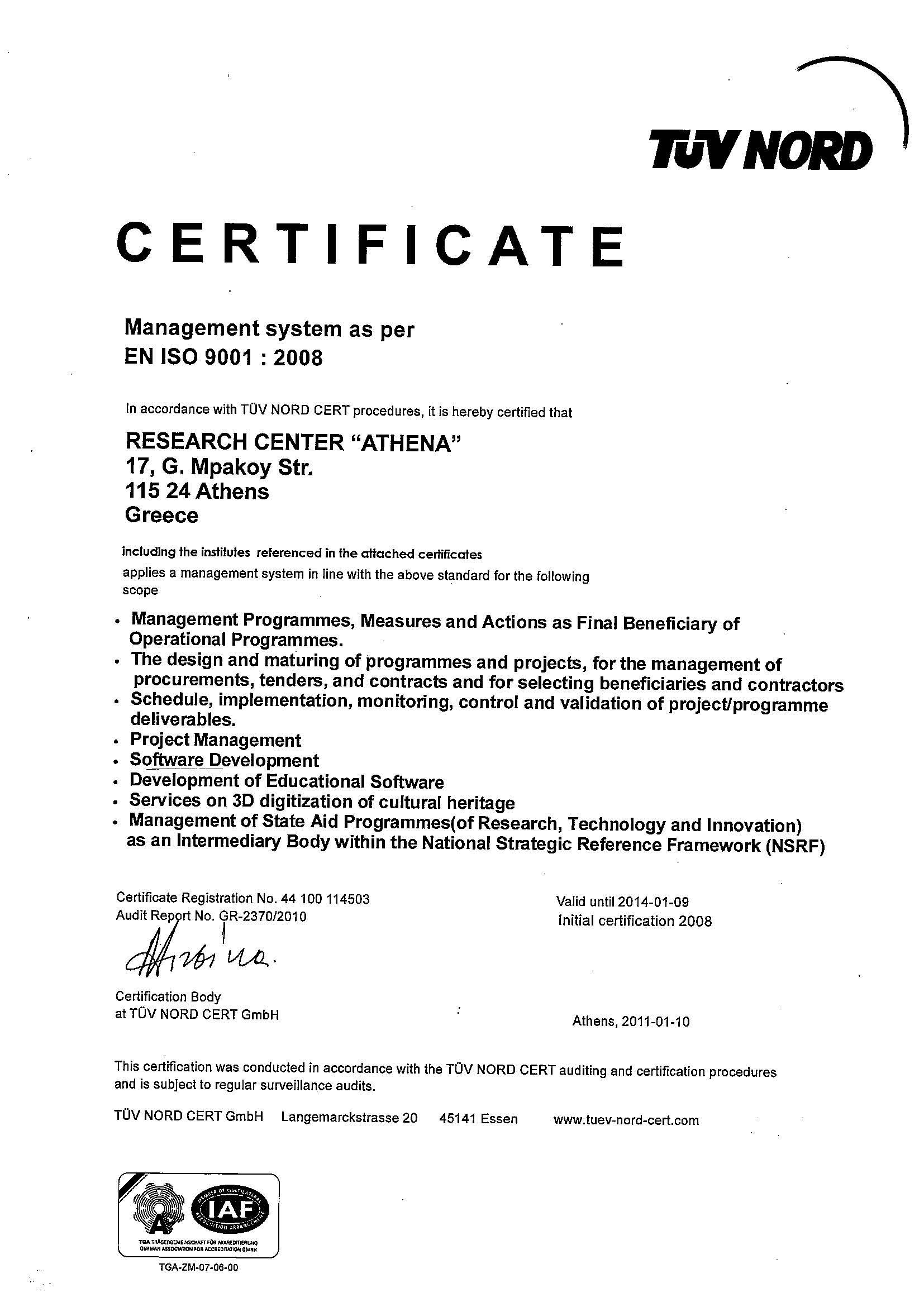
ISO_9001_2000_20110110_TUV_HELLASISO_9001_2000_20110110_TUV_NORD

“Thrace 2010” Exhibition Award


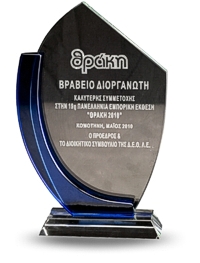
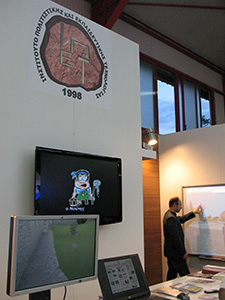
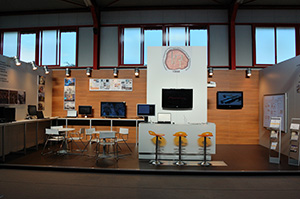
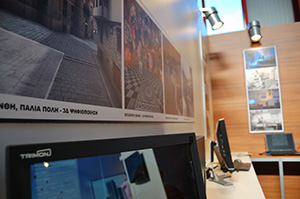
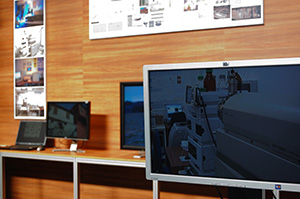
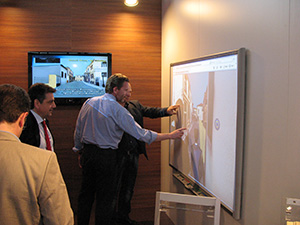
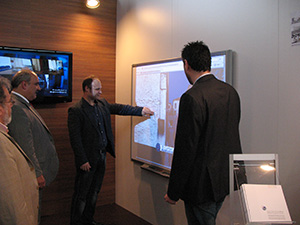
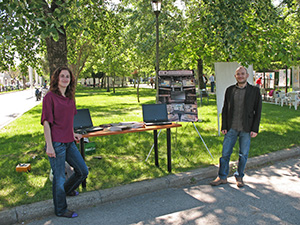
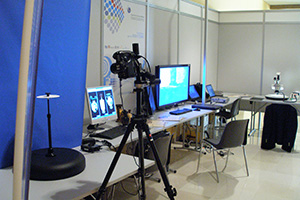
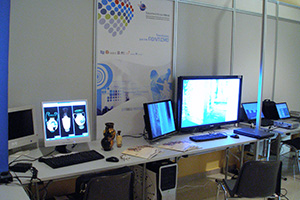
With the support of the General Secretariat for Research and Technology of the Hellenic Ministry of Education, Lifelong Learning and Religious Affairs, CETI/Athena participated in the 19th National Trade Fair “Thrace 2010” held in Komotini between 27 and 30 May 2010. At the Exhibition, the Institute was awarded the prize of the “Best participation and organization of exhibition pavilion” for its integrated and flawless functionally and aesthetically organization.

Award of Excellence

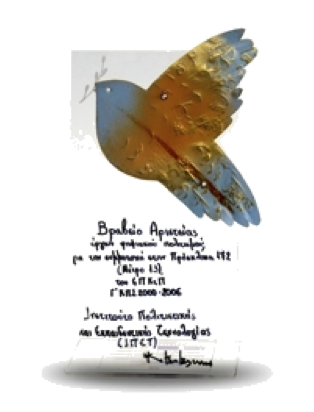
The Excellence Award for projects in digital culture was awarded to the Institute for its successful participation in Calls 65 and 172 of the Operational Programme “Information Society” of the Third Framework Programmes 2000-2006, and specifically for the project “DIGITECH-III: Study of three-dimensional digitisation technologies” coordinated by Dr. George Pavlidis, Principal Researcher of the Institute.

Symposium “ICTs in Cultural Heritage”

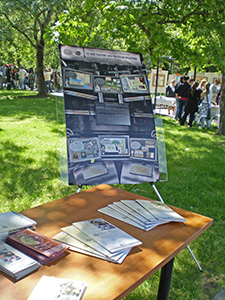
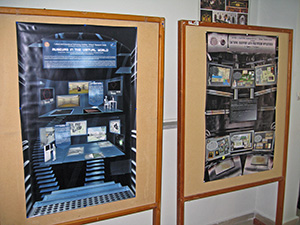
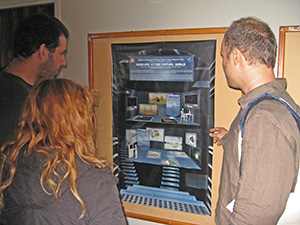
The Department of Multimedia participaed in the International Symposium “Information and Communication Technologies in Cultural Heritage” held in Ioannina, Greece, Oct. 16-18, 2008, with the work “Museums In The Virtual World”.

“Digital Innovation for the Society of Knowledge”

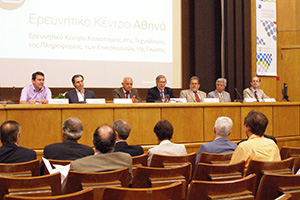
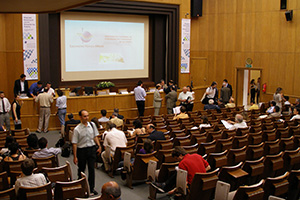
The Department contributed to the planning and organization of the Institute’s participation to the Workshop “Digital Innovation for the Society of Knowledge” organized by the ‘ATHENA’ Research Center on March, 19th, 2008, held at the Eugenides Foundation, Athena, Greece.
The Department co-ordinated a roundtable on the “Applications of 3D technologies in culture”, under the thematic unit “Pictures from the digital future: emerging technologies of information” with the kind participation of:

  • Dr. George Pavlidis, ATHENA – Three-dimensional digital recording
  • Prof. Christodoulos Chamzas, ATHENA/DUTH – Enhancement of Cultural Heritage using three-dimensional reconstruction technologies
  • Prof. Andreas Georgopoulos, NTUA – New Technologies at the service of Geometric Documentation of Monuments
  • Prof. Vasilios Tsioukas, DUTH – The Role of Education in the Documentation of Monuments

3D Digitization of a monument

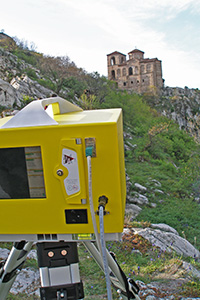
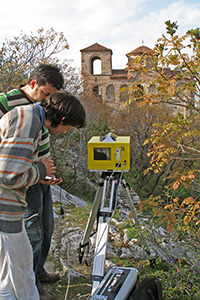
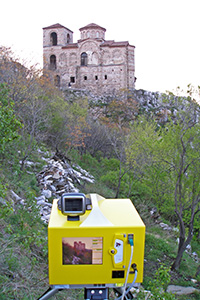
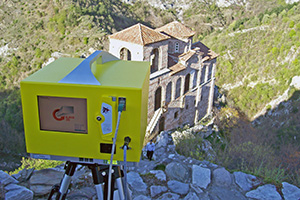
Under the scope of INTERREG ΙΙΙ A / PHARE CBC – “Cooperation network for knowledge dissemination on 3D digitiza-tion applications” project, staff of the Department traveled to South Bulgaria accompanied by the Bulgarian partners in order to exchange information on 3D digitization of large scale monuments and to proceed to a case-study digitization of a monuments that dates back to the Byzantine era.
Time-of-flight was used as the principal method for the 3D digitization by using an Optech ILRIS3D scanning device.
The travel was a big success, the Bulgarian partners were very hospitable, the little village named ‘Kosovo’ in the mountainous area absolutely picturesque and the monument great for our case-study.