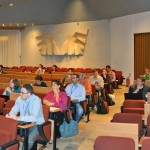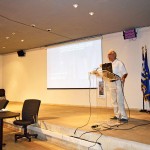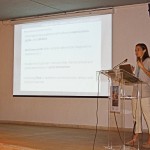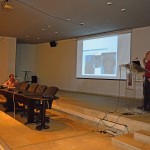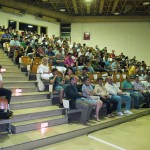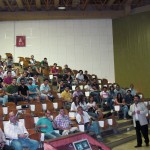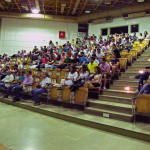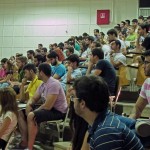
MediaLab organizes ‘app_Dev_Workshop’

facebook_event_banner_small

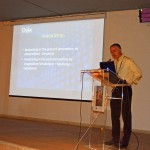
MediaLab in collaboration with the Special Engineering Lab of Democritus University of Thrace co-organises a two-day workshop on smart mobile app development and invites you all to participate!
The workshop takes place on 16-17 May 2015.
We would like to express our thanks to the Democritus University of Thrace for hosting the workshop at the amphitheater at PROKAT buildings.
This workshop focuses on developing iOS apps but on day-1 the principals that will be presented have a wider application.
Here is the official Workshop page: https://www.facebook.com/appDevXanthi2015

Here is a draft workshop programme schedule:
WORKSHOP PROGRAMME SCHEDULE
Day #1 ——–
Session #1 – Introduction and experience
Session #2 – The professional perspective – before starting the development
1. Introduction – Why should I develop an app? What is needed?
2. Monetizing – How do I make money?
3. Marketing- Do I need market promotion or not?
4. Performance Metrics – How to check if my app is successful?
Day #2 ——–
Session #1- Inside iOS SDK, development tools, design principles and programming languages
1. iOS Developer Program, iTunesConnect.
2. iOS SDK, development tools and programming languages
3. iOS SDK & design principles
4. iOS SDK & basic APIs
Session #2 – Development of a simple iOS application A-Z

The workshop is supported by the national programmes ‘GameIt’ (http://www.gameit.gr, http://gameit.ipet.gr) and ‘Synthesis’ (http://synthesis.ipet.gr/portal, http://synthesis.ipet.gr).

qrcode-fb-like qrcode-fb-link
Like this event on Facebook See the Facebook event page

Η ομάδα έρευνας πολυμέσων του Ερευνητικού Κέντρου “Αθηνά” στην Ξάνθη σε συνεργασία με το Εργαστήριο Ειδικής Μηχανολογίας του Δημοκρίτειου Πανεπιστήμιου Θράκης οργανώνει διημερίδα ανάπτυξης εφαρμογών έξυπνων κινητών συσκευών και σας προσκαλεί να συμμετέχετε!
Η διημερίδα λαμβάνει χώρα 16-17 Μαΐου 2015.
Ευχαριστούμε θερμά το ΔΠΘ για την ευγενική παραχώρηση του χώρου του αμφιθεάτρου στα κτήρια ΠΡΟΚΑΤ!
Η διημερίδα αυτή εστιάζει στην ανάπτυξη εφαρμογών iOS αλλά οι γενικές αρχές και οι παρουσιάσεις της πρώτης ημέρας έχουν πιο γενική εφαρμογή.
Εδώ είναι η επίσημη σελίδα της διημερίδας: https://www.facebook.com/appDevXanthi2015

Εδώ είναι ένα προκαταρκτικό πρόγραμμα της διημερίδας:
ΠΡΟΓΡΑΜΜΑ ΔΙΗΜΕΡΙΔΑΣ
Ημέρα #1 ——–
Συνεδρία #1 – Εισαγωγή και εμπειρία
Συνεδρία #2 – Από τη σκοπιά του επαγγελματία, βασικές πληροφορίες πριν την ανάπτυξη μιας εφαρμογής
1. Εισαγωγή – Γιατί να κάνω μια εφαρμογή; Τι χρειάζεται για την ανάπτυξη εφαρμογών;
2. Monetizing – Πως μπορώ να αντλήσω χρήματα;
3. Marketing- Χρειάζεται προώθηση ή όχι;
4. Performance Metrics – Πως ελέγχω αν η εφαρμογή μου αποδίδει;
Ημέρα #2 ——–
Συνεδρία #1- Στα ενδότερα του iOS SDK, εργαλεία ανάπτυξης, αρχές σχεδίασης και γλώσσες προγραμματισμού
1. iOS Developer Program, iTunesConnect.
2. iOS SDK, εργαλεία ανάπτυξης & γλώσσες προγραμματισμού
3. iOS SDK & αρχές σχεδίασης
4. iOS SDK & βασικά APIs
Συνεδρία #2 – Παράδειγμα ανάπτυξης μιας απλής εφαρμογής για iOS από το μηδέν

Η διημερίδα στηρίζεται από τα προγράμματα GameIt (http://www.gameit.gr, http://gameit.ipet.gr) και Synthesis (http://synthesis.ipet.gr/portal, http://synthesis.ipet.gr), δύο εθνικά προγράμματα ΕΣΠΑ.

sticker02

MediaLab at the Athens Science Festival

Logo of Athens Science Festival
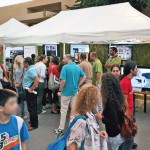
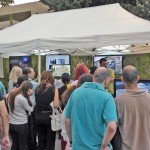
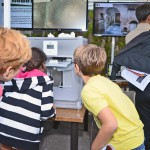
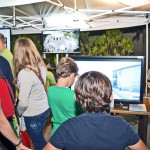
MediaLab participated in the Athens Science Festival event as part of the Athena Research Centre’s science and technology exhibition at the Technopolis-Athens. Great week for young people and the general public to peek at the weird and wonderful world of science and technology!
MediaLab’s exhibition theme was “3D scanning, viewing and printing” and was briefly described as follows:

Digitization (or scanning) of objects in three dimensions is now a widespread practice that enables the complete optical documentation of the objects of our world.
With the real-world objects being brought to a 3D virtual world, we have the possibility of inspecting them interactively from any desired viewpoint, gaining significantly more insight than by a typically viewing a photo that provides just a single static viewpoint.
In the specific case of the digital documentation of cultural heritage, 3D digitization has been successfully used in capturing the geometry and colour of objects or monuments with multiple objectives, such as recording the current state (visual documentation), providing means for enhanced study-investigation, supporting conservation-restoration activities, empowering education and culture dissemination, even supporting physical reproduction using 3D printing.
The cultural technology team at the MediaLab of “Athena RIC” has developed extensive know-how in cultural technologies and specifically 3D digitization and VR applications in cultural heritage and presents here contemporary approaches for 3D digitization of cultural objects, along with easy-to-use techniques for Web dissemination and simple 3D printing capabilities.

MediaLab’s participation included the demonstration of

  • two 3D scanning techniques (based on structure from motion and structured light)
  • 3D viewing of 3D scanned content in 3D TVs without glasses
  • 3D printing of 3D scanned or modelled content on a simple 3D PLA-based printer
  • a virtual museum framework for educational practice based on gaming technologies
  • a game-based learning integrated educational system based on gaming technologies, along with Doukas Schools, Omega Technology and Byte Computer

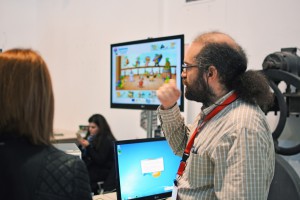
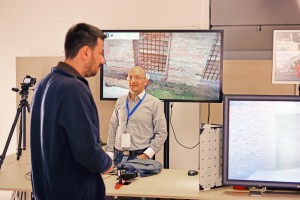
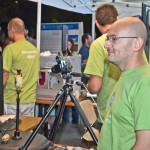
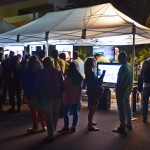
Here is a gallery of photos of MediaLab’s exhibition at the event:

MediaLab at the European Researchers’ Night event

renlogoweb
MediaLab participated in the European Researchers’ Night event as part of the Athena Research Centre’s science and technology exhibition at the NCSR Demokritos. Fortunately the weather was great and the event was really crowded till midnight!

MediaLab’s exhibition theme was “Three-dimensional (3D) digital recording and printing: application to Cultural Heritage” and was briefly described as follows:

Digital recording of objects (or digitisation or scanning) in 3 dimensions is now a widespread practice that enables us complete visual recording of the objects of our world. The digital copies that 3D digitisation produces give us the opportunity of examining the objects from any desired angles, surpassing viewing a conventional picture that simply attaches an angle.
Particularly in the cultural heritage domain, 3D digitisation has been applied with great success to accurately record the geometry and colour of objects or monuments with multiple objectives: taking a snapshot of the current situation (visual documentation), promoting the study, restoration, education, dissemination and replication even production of real world copies with 3D printing.
MediaLab shows in this event how is currently feasible to capture in 3D objects of cultural value with photographic techniques, to present them to the Internet or on 3D displays and to reproduce them with 3D printing.

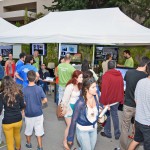
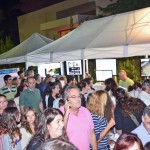
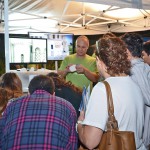
Here is a gallery of photos of MediaLab’s exhibition at the event:

Call for collaboration under the Greek National Project ‘Synthesis’

logo-Synthesis

The Institute for Language and Speech Processing has an open call for 7 external collaborators for the purposes of the Greek National Project ‘Synthesis‘. The call is open till July 18, 2014, 15:00.

Collaboration involves:

  • Development of a DBMS using international standards and best practices for web applications
  • Development of interactive multimedia applications and 3D/VR applications
  • Vocabularies development consulting
  • Direction of computer games
  • Development of cross-disciplinary educational activities
  • Scenario development of computer games

*** The first two vacancies involving DBMS and application development will complement the Xanthi’s Research Group.

Extensive call description can be found at the ILSP job vacancies page.

—————————————— Greek version / Ελληνική έκδοση

Το Ινστιτούτο Επεξεργασίας του Λόγου αναζητά 7 συνεργάτες για τις ανάγκες του Εθνικού έργου ‘Synthesis‘. Η πρόσκληση είναι ανοικτή έως τη 18η Ιουλίου 2014, ώρα 15:00.

Η συνεργασία περιλαμβάνει:

  • Ανάπτυξη συστήματος βάσης δεδομένων βάσει διεθνών προτύπων και διαδικτυακών εφαρμογών
  • Ανάπτυξη διαδραστικών πολυμεσικών εφαρμογών και εφαρμογών 3Δ
  • Ειδικός σύμβουλος για την ανάπτυξη λεξιλογίων
  • Σκηνοθεσία ηλεκτρονικού παιχνιδιού
  • Συμμετοχή στην ανάπτυξη διαθεματικών εκπαιδευτικών δραστηριοτήτων
  • Σενάριο ηλεκτρονικού παιχνιδιού

*** Οι δύο πρώτες θέσεις που αφορούν την ανάπτυξη βάσης δεδομένων και πολυμεσικών εφαρμογών θα συμπληρώσουν την Ερευνητική Ομάδα Πολυμέσων στην Ξάνθη.

Αναλυτική περιγραφή της πρόσκλησης βρίσκεται στη σελίδα ανοικτών θέσεων συνεργασίας του ΙΕΛ.

Call for collaboration under the Greek National Project ‘GameIt’

logo-GameIT
The Multimedia Research Group has an open call for 4 external collaborators for the purposes of the Greek National Project ‘GameIt‘. The call is open till June 19, 2014, 15:00. A brief description of the vacancies is as follows:

  1. Two (2) electrical or informatics engineers for the development of
    • Ontology mapping system
    • Serious games scenario editor (world & scenario editor)
    • Multiplayer online game system
  2. Two (2) historians/archaeologists or/and art historians for
    • Collection and cataloguing of cultural and educational sources
    • Analysis and rating of cultural and educational resources
    • Mapping of ontologies of various resources to the ontology of ‘GameIt’
    • Collection, cataloguing and analysis of thesauri and vocabularies

Extensive call description can be found at the ILSP job vacancies page.

—————————————— Greek version

Η Ομάδα Έρευνας Πολυμέσων αναζητά 4 συνεργάτες για τις ανάγκες του Εθνικού έργου ΠΑΒΕΤ ‘GameIt‘. Η πρόσκληση είναι ανοικτή έως τη 19η Ιουνίου 2014, ώρα 15:00. Μια συνοπτική περιγραφή των εν λόγω θέσεων ακολουθεί:

  1. Δύο (2) μηχανικοί/πληροφορικοί για την ανάπτυξη
    • Συστήματος αντιστοίχισης οντολογιών
    • Μηχανή συγγραφής σεναρίων παιχνιδιών (world & scenario editor)
    • Σύστημα πολυσυμμετοχκού διαδικτυακού παιχνιδιού
  2. Δύο (2) ιστορικοί/αρχαιολόγοι ή/και ιστορικοί τέχνης για
    • Συλλογή και καταγραφή πολιτιστικών και εκπαιδευτικών πηγών
    • Ανάλυση και διαβάθμιση πολιτιστικών και εκπαιδευτικών πηγών
    • Αντιστοίχιση οντολογιών πηγών με την οντολογία του έργου ‘GameIt’
    • Συλλογή, καταγραφή και ανάλυση θησαυρών όρων και λεξικών

Αναλυτική περιγραφή της πρόσκλησης βρίσκεται στη σελίδα ανοικτών θέσεων συνεργασίας του ΙΕΛ.

3D digital cultural heritage A to Z

3D digital cultural heritage begins its life with 3D digitisation as part of a complete 3D recording approach and completes with the 3D applications and reproduction. 3D physical reproduction has gained momentum in the recent years as 3D printing technologies are becoming more and more accessible, mainly due to the reduction of cost both in hardware and in consumables used for printing.
Recently our lab acquired one such 3D printing system, the CubeX by 3D Systems. With this system our lab has now completed the puzzle of 3D digital cultural heritage, covering all aspects involved. With an Arius 3D laser scanning system, a customised structured light scanner based on the David 3D scanning system, a shape from silhouette scanning system and a Structure-From-Motion-Dense Multi-View 3D Reconstruction method with a turntable, along with an Optech Ilris 3D time-of-flight laser scanning system for large structures and open spaces, we are able to cover a diversity of 3D digitisation projects. With a long experience in data structures, cultural documentation and work for Europeana we are able to support any cultural documentation project. Our even longer experience in multimedia applications for cultural heritage in many forms and platforms covers numerous possibilities for digital delivery, scientific study, education and entertainment. Now with the addition of the CubeX 3D printing system we are able to cover the aspect of physical reproduction.

Our newly acquired CubeX system characteristics in brief:
Z axis resolution:
0.100mm (0.004” / 100 microns)
X-Y resolution:
+/- 1% of object dimension or +/- 0.2mm (0.008” / 200 microns) whichever is greater
Maximum build size:
275mm (w) x 265mm (l) x 240mm (h) or 10.75” x 10.75” x 9.5”

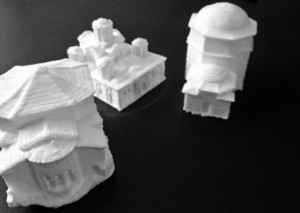
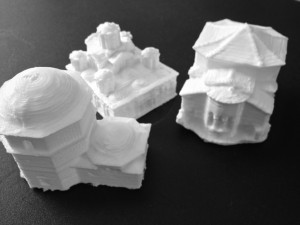
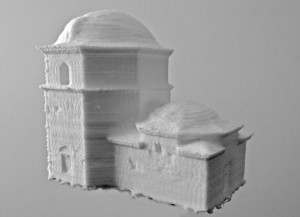
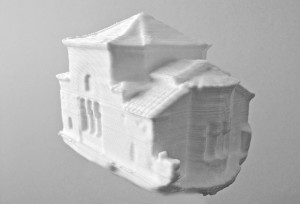
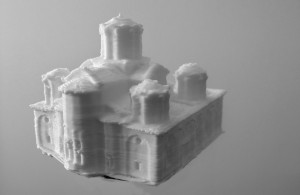
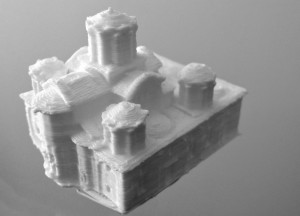
Here are a few draft 3D printed models from our previous work on monument digitisation:
IMG_01384 IMG_01385
IMG_01376IMG_01374
IMG_01379IMG_01382

Collaboration on serious games development

The Multimedia Research Group of Athena Research Centre announces an open call to students and post-grad students of the Engineering Departments of Democritus University of Thrace for a possible collaboration in serious games development. This call is also open for students or post-grads that live in the region and have a programming background and are gaming enthusiasts.
Students and post-grad students that have an interest in programming and specifically 3D game development can express their interest by sending a direct email to George Pavlidis, Dr. Electrical Engineer and Principal Researcher of Athena Research Centre, including their resume until the 15th of March 2014this call remains open indefinitely.
This call can support a limited number of internships on

serious games development, mainly focusing on the application of the Unity3D game engine and the development of first-person simple dynamic interactive virtual environments.

You may contact us directly at Kimmeria University Campus:

Internships 2014

Two positions have been announced for the 1st quarter of 2014 for students of the Dept. of Electrical and Computer Engineering of Democritus University of Thrace at the ‘Atlas’ system (http://atlas.grnet.gr) regarding students to practice on multimedia engineering and specifically:

Participation in the research and development activities of the Multimedia Research Group of Athena Research Centre in Xanthi, focusing on the digitisation, modelling and dissemination of cultural heritage objects using state-of-the-art methodologies and laboratory infrastructures.

Applicants should have a good knowledge of the english language. Any prior involvement in problem solving and algorithm development using programming is also considered a plus.
Applications are available through the ‘Atlas’ system.

Color Gravity Descriptor

Currently we are working on our new color descriptor for content-based retrieval of 2D static images (CBIR). The descriptor is based entirely on the color information and the positions of color centroids within the image plane. It is scale and rotation invariant and produces retrieval results that are better than the known MPEG-7 image descriptors. We have indications that the descriptor performs better than any other descriptor that is entirely based on color and no other structural-scene information, such as points of interest or texture. Our descriptor was named Color Gravity Descriptor (CGD) as the method involved centroids of color masses.
As the algorithm involves a couple of heuristics we are currently working on optimisations, looking for optimum conditions and possible limitations. We are planning to give it a try at IEEE ICIP2014…
CGD, in summary, applies color reduction, and for each color in the indexed image it calculates the centroid, its position (bounding box) within the image and its distribution (sparsity). It then forms a graph-like construct based on the centroids and connects these centroids using weights produced by the position/sparsity of the colors, thus forming the image signature.
The signature is N2 in length, N being the number of colors after the color reduction.
Extensive tests using the Wang database showed very promising retrieval results.
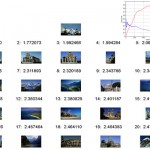
Some indicative retrieval results follow.

VAMCT2013 – huge success

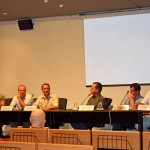
VAMCT2013 – the 1st International Workshop on “Virtual Archaeology: Museums & Cultural Tourism” concluded successfully.
More than 60 participants and about 40 original works have been presented.
The participants agreed to proceed with the organization of a summer school next year and VAMCT2015 the year after.

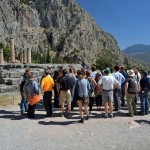
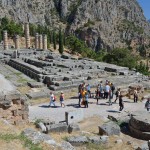
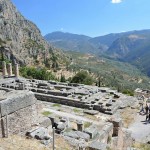
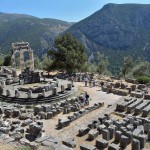
Some shots from the Conference and the visits to the museum and archaeological site of Delphi follow.

From interactive robots to collective human-machine intelligence

Dr. Nikolaos Mavridis was invited to talk about the transition from interactive robots to collective human-machine intelligence.

Nikolaos Mavridis

Dr Mavridis is founder and director of Interactive Robots and Media Lab, Ass. Professor of Research, NYU and researcher at NCSR Demokritos.

Dr. Mavridis was invited by the Lab of Special Engineering of Democritus University of Thrace in collaboration with Athena Research Center, the IEEE Student Branch of Thrace, the Lab of Measurement Systems of TEI of Kavala and Prisma Electronics SA.

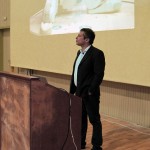
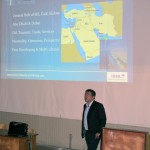
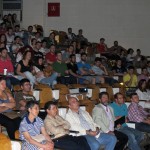
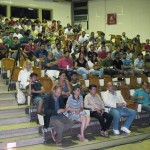
The event was a great success with many participants (both students and faculty/researchers). Dr. Mavridis presented the state-of-the-art research on interactive robots and shared his insights and his vision of a transition from the era of interactive robots to and era of collective human-machine intelligence. He used simple and intuitive examples to present both the current trend and his future vision. The presentation concluded with a round table session where an interesting exchange of ideas took place between the participants.

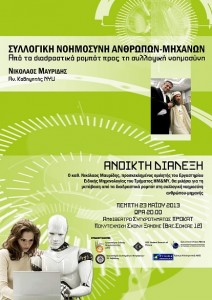
Below is the banner of the event and here is the invitation (in Greek).

event_banner

A photo gallery of the event:

VAMCT2013 – 1st International Workshop on “Virtual Archaeology: Museums & Cultural Tourism”

The University of the Aegean, Dept. of Mediterranean Studies, Laboratory of Archaeometry (GR)
in collaboration with:
The University of the Aegean, Dept. of Product and Systems Design Engineering (GR)
Athena-Research and Innovation Center in Information, Communication and Knowledge Technologies (GR)
Duke University, Dept. of Classical Studies (US)
Under the Auspices of the Ministry Culture and Sports

organizes VAMCT2013 – 1st International Workshop on “Virtual Archaeology: Museums & Cultural Tourism”

More information, submission and registration at VACMT2013 official website.
Visit also the official Facebook Event page.

Invited talks at AUTH seminar

Anestis Koutsoudis and George Pavlidis participated in the Seminar “Diagnostic techniques in the science of artworks curation” organized by the Crossdisciplinary Postgraduade Programme “Protection, Conservation and Restoration of Cultural Monuments” of the Aristotle University of Thessaloniki, held 17th-19th Feb. 2012.

This included invited talks at Aristotle University of Thessaloniki and a visit at the Multimedia Department of the Athena Research Center in Xanthi.

Here is the seminar program (greek).
Here is a simplified PDF version Dr. Koutsoudis’ talk (greek) and a simplified PDF version of Dr. Pavlidis’ talk (english).

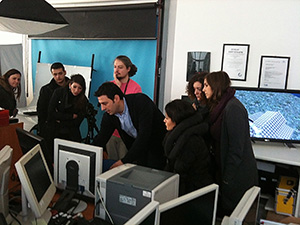
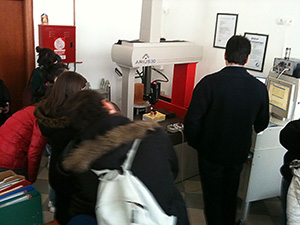
Here are a couple of photos from the 3D technologies demonstration @ the Multimedia Department.

Testing WebGL technology…

This is a demo of five 3D digital replicas of artefacts that one can examine in a WebGL enabled browser.

It uses the X3DOM script to exploit the WebGL functionality in order to visualise real time 3D graphics without the need of any additional plug-ins in a Web page.

By adviced that not all web browsers are compliant with the WebGL standard yet.